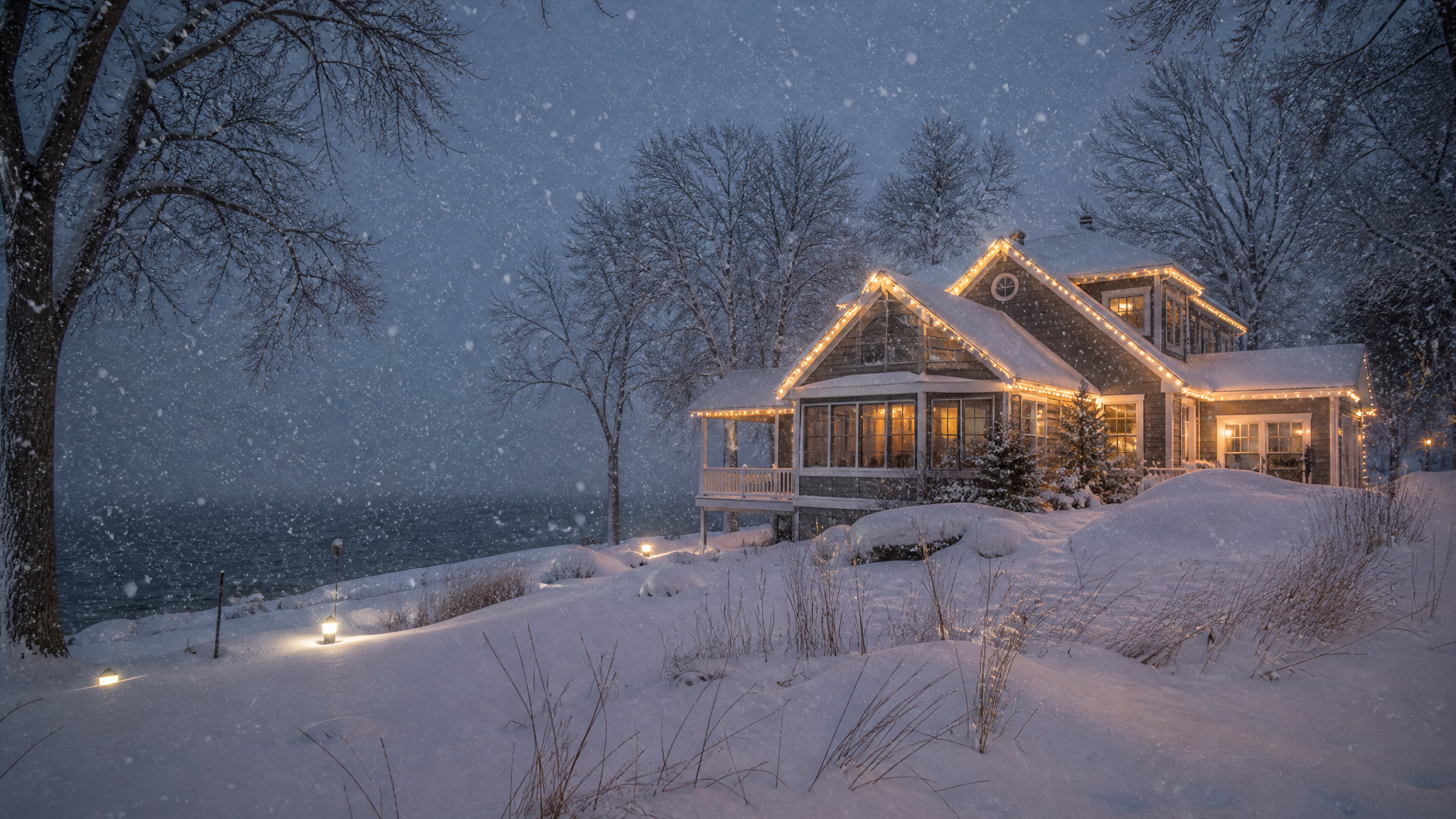
Lake-effect snow off Lake Michigan compresses the West Michigan install window. Here is how we plan around it.
Anyone living in West Michigan knows the first real snow often arrives weeks earlier than the rest of the state expects. Lake-effect snow off Lake Michigan can dump four to six inches on Grand Rapids in mid-November while inland Michigan still has fall foliage. That one weather pattern reshapes our whole installation calendar.
The Pattern
Cold air sweeps across the warm waters of Lake Michigan in late October and November. Moisture lifts, freezes, and falls as heavy snow bands on the downwind shore. Muskegon, Grand Haven, Holland, South Haven, Grand Rapids, and Ada all sit in or near that path.
So our usable install window opens earlier and closes earlier than most of the country. We start lakeshore and Grand Rapids installs in late September and aim to finish residential by Thanksgiving week. Commercial runs into early December, working between snow events.
Snowbelt Zones Are Not All Equal
Lake-effect intensity drops off as you move inland. Grand Haven, Holland, and Muskegon take the worst of it and get scheduled first. Grand Rapids metro sits at the edge of the heaviest bands and comes next. Kalamazoo and Battle Creek catch meaningful lake-effect but less of it. Lansing and Jackson sit far enough east that hard frost dates drive them more than snowbelt timing, so those zones give us the most late-season flexibility.
What That Means For Booking
On the lakeshore, reserve your install slot by August 15 for a pre-Thanksgiving residential install, or by Labor Day for early-December commercial work. Grand Rapids metro runs about two weeks behind that, and inland markets a couple of weeks behind again.
After mid-October our lakeshore calendar effectively closes for residential. We can still take commercial contracts with flexible install windows but residential pre-holiday completion gets very difficult.
How Lake-Effect Changes The Install Itself
Cold ladder work on icy mornings is part of every Michigan winter, but lake-effect events change the rules. When a heavy band rolls through, we do not put crews on roofs. Safety first, always. That can cost us two or three working days per event. On exposed lakeshore bluff properties wind matters as much as snow, because sustained onshore gusts can make a roofline unworkable even on a clear day.
Our scheduling carries a buffer between installs to absorb lost days, so one storm never cascades into missed customer dates.
Permanent Lighting and Lake-Effect
Permanent LED channel systems handle lake-effect snow without issues. The channels are sealed, the LEDs are rated for moisture and freeze cycles, and snow load on a properly installed channel does not stress the system. We have permanent systems in East Grand Rapids and Grand Haven that have run through five winters of heavy lake-effect with zero outages. For commercial properties and lakeshore second homes especially, permanent eliminates the annual race against early snow.
What To Do If The First Storm Hits Before Your Install
We reschedule. Every install carries a weather contingency in the contract. If a major event pushes the calendar, we will be in touch within 24 hours with your new date.
Bottom Line For West Michigan
Book early, especially on the lakeshore. Stay flexible. Trust the crew on weather calls. Those three things get your lights up reliably even when lake-effect throws its worst at us.